Designing Playgrounds That Challenge Kids and Build Confidence

Let Them Try the Hard Thing
I am about to say something that feels mildly illegal as both a playground designer and a mother:
Sometimes my favorite thing on a playground is the thing your kid looks at and says, “Absolutely not.”
Great Playgrounds Should Include Challenge
At least the first time.
Because a great playground shouldn’t make every movement obvious or every route easy. Kids need opportunities to climb, balance, reach, stretch, problem-solve, change their minds, try again—and occasionally stare at a climber like it has personally offended them.
That challenge is intentional.
The U.S. Consumer Product Safety Commission (CPSC), the federal agency that publishes public playground safety guidance, actually recommends that playgrounds offer a series of graduated challenges appropriate to children’s abilities—challenges kids can recognize and choose to take on.
ASTM standards work alongside that guidance to address serious hazards, not to eliminate challenge from play.
The Difference Between Risk and Hazard
And there is an important difference between risk and hazard.
A hazard is something a child can’t reasonably recognize or manage: damaged equipment, an entrapment, an unsafe fall condition.
Risk is the kid looking at a climbing route and thinking:
“I think I can do that.”
Then figuring out whether they actually can.
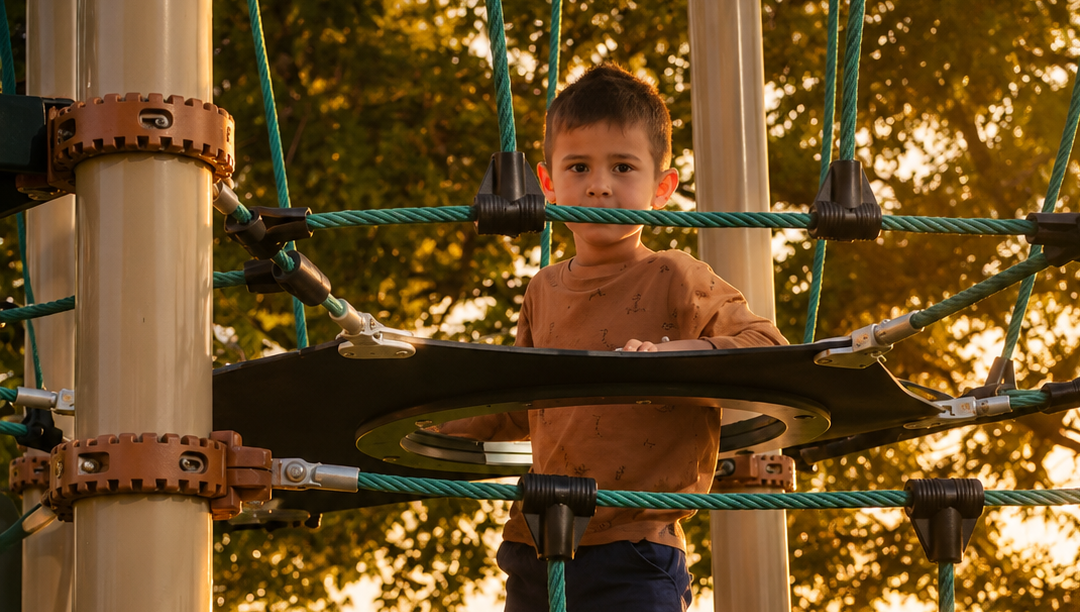
Why Adventurous Play Matters for Child Development
Research on adventurous or “risky” play has linked these experiences with increased physical activity and benefits to confidence, social-emotional development, problem-solving, and learning to judge personal limits.
Designing Playgrounds That Grow With Kids
It’s also one of the reasons I love working with manufacturers who understand that challenge is part of good play. Playcraft designs equipment to engage kids across different developmental levels, while TrekFit’s climbing, balancing, and obstacle activities naturally give kids opportunities to build skills, confidence, and ability over time.
For me, that’s the sweet spot in playground design: give them something they can do today—and something they’ll be determined to conquer tomorrow.
Not scary.
Not unsafe.
Just enough “Ooooooh... can I do that?”
Because eventually they do.

Challenge Builds Confidence
And you can almost see it happen—that little flash of:
“WAIT. I DID IT.”
They stand a little taller. They go back and do it again. Then they grab a friend to show them. And approximately 45 seconds later, all that newly acquired confidence convinces them they are now qualified for something significantly harder.
Which, inconveniently, is exactly the point.
Challenge. Attempt. Failure. Adjustment. Success.
That’s not just play. That’s a tiny human figuring out what they’re capable of.
And honestly, that’s pretty cool.