Playground Maintenance: Protecting Your Investment & Keeping Play Going

A new playground is a major investment, and installation is only the beginning. A consistent inspection and maintenance program helps extend the life of equipment, manage risk, control long-term costs, and, most importantly, keep play spaces ready for the kids who use them every day.

Preventative maintenance can reduce upkeep and replacement costs while helping schools, cities, and agencies protect their investment.

Your Maintenance Team May Already Be Your Best Resource

Many cities, parks departments, and school districts already have maintenance teams in place. These teams know their facilities, perform regular checkups, and in many cases even have Certified Playground Safety Inspectors (CPSIs) on staff.

A strong playground maintenance program doesn't necessarily need to be complicated or outsourced. What matters most is having trained people, a consistent schedule, good documentation, and a process for addressing issues when they're found.
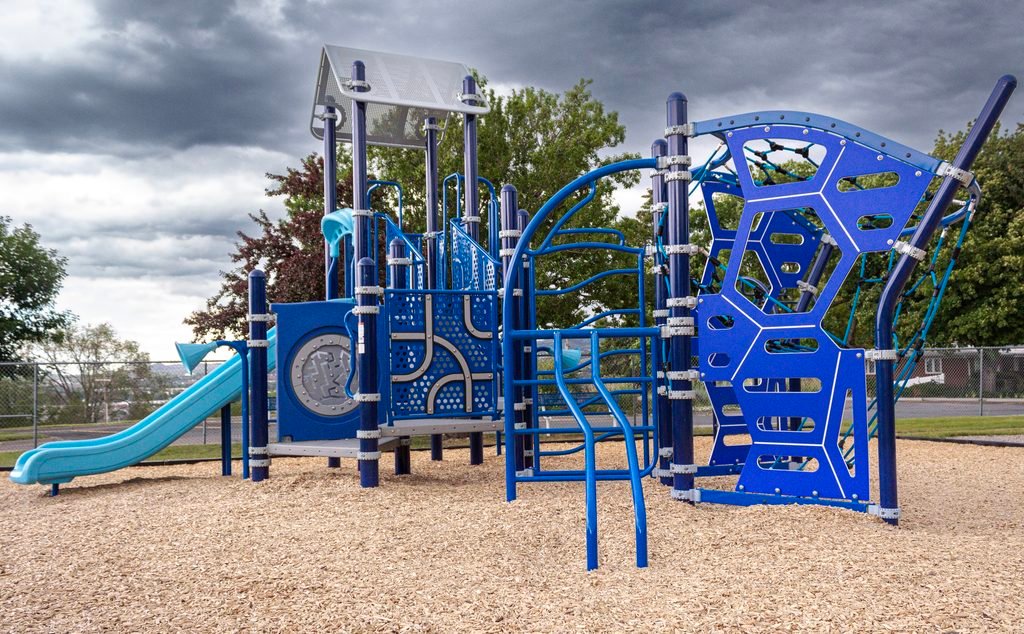
Bonneville School District #93 in Idaho Falls, Idaho, is a great example. Their consistent approach to playground inspection and maintenance demonstrates what we love to see: an organization taking ownership of its playgrounds and making regular maintenance part of its ongoing facility operations. They understand their playgrounds and maintenance needs, which makes our job easier and helps keep their playgrounds safe, functional, and ready for play. A special shoutout to Mike Richards, Maintenance Technician and CPSI, for developing a strong maintenance program and leading the District’s playground repairs in-house.

A Little Maintenance Goes a Long Way

Playgrounds experience constant use, changing weather, and normal wear and tear. Regular checks can catch things like loose hardware, worn swing chains, damaged components, exposed footings, deteriorating surfacing, rust, sharp edges, and debris before they become larger problems.

And consistency matters. Our maintenance schedule breaks the process into manageable daily/weekly, monthly, and annual tasks; from basic site and safety checks to structural inspections, surfacing maintenance, documentation, and a comprehensive annual safety review.

FREE Playground Maintenance Resources

You don't have to build your maintenance program from scratch. Luckydog Recreation is providing three FREE resources to help your team get started:

Whether you have a CPSI on staff, an experienced parks crew, a school facilities team, or you're simply trying to create a better maintenance routine, these resources can help give your team a place to start.

A little preventative maintenance goes a long way toward protecting your investment, extending the life of your playground, and keeping kids playing for years to come.
Need a Little Extra Help?

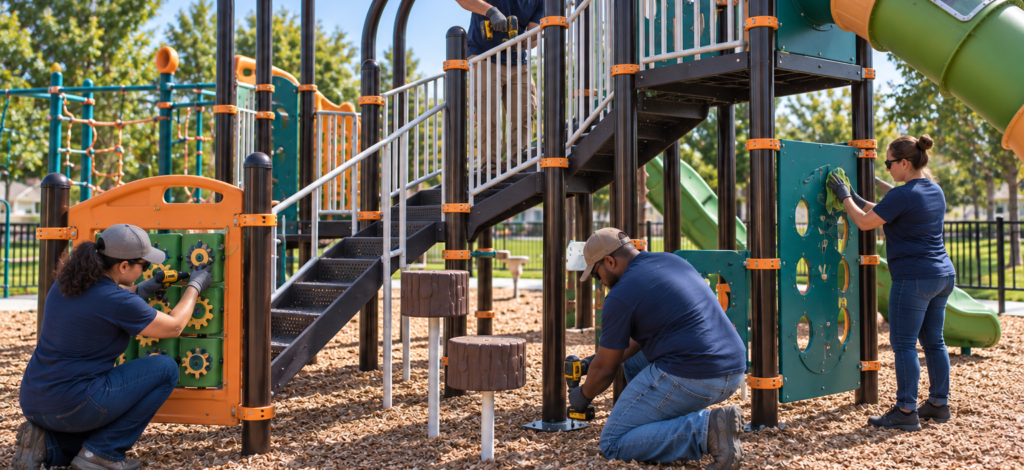
Not every organization has the staff or time to handle playground maintenance in-house, and that’s where Luckydog Recreation can help. Our experienced team can provide playground maintenance services and CPSI inspections to help identify concerns, address wear and tear, and keep your playground in great shape.

Contact your Creative Play Designer today for pricing on Luckydog Recreation’s maintenance services or CPSI inspections.

Designing Playgrounds That Challenge Kids and Build Confidence


Let Them Try the Hard Thing

I am about to say something that feels mildly illegal as both a playground designer and a mother:

Sometimes my favorite thing on a playground is the thing your kid looks at and says, “Absolutely not.”

Great Playgrounds Should Include Challenge

At least the first time.

Because a great playground shouldn’t make every movement obvious or every route easy. Kids need opportunities to climb, balance, reach, stretch, problem-solve, change their minds, try again—and occasionally stare at a climber like it has personally offended them.

That challenge is intentional.

The U.S. Consumer Product Safety Commission (CPSC), the federal agency that publishes public playground safety guidance, actually recommends that playgrounds offer a series of graduated challenges appropriate to children’s abilities—challenges kids can recognize and choose to take on.

ASTM standards work alongside that guidance to address serious hazards, not to eliminate challenge from play.

The Difference Between Risk and Hazard

And there is an important difference between risk and hazard.

A hazard is something a child can’t reasonably recognize or manage: damaged equipment, an entrapment, an unsafe fall condition.

Risk is the kid looking at a climbing route and thinking:

“I think I can do that.”

Then figuring out whether they actually can.


Why Adventurous Play Matters for Child Development

Research on adventurous or “risky” play has linked these experiences with increased physical activity and benefits to confidence, social-emotional development, problem-solving, and learning to judge personal limits.

Designing Playgrounds That Grow With Kids

It’s also one of the reasons I love working with manufacturers who understand that challenge is part of good play. Playcraft designs equipment to engage kids across different developmental levels, while TrekFit’s climbing, balancing, and obstacle activities naturally give kids opportunities to build skills, confidence, and ability over time.

For me, that’s the sweet spot in playground design: give them something they can do today—and something they’ll be determined to conquer tomorrow.

Not scary.

Not unsafe.

Just enough “Ooooooh... can I do that?”

Because eventually they do.

Challenge Builds Confidence

And you can almost see it happen—that little flash of:

“WAIT. I DID IT.”

They stand a little taller. They go back and do it again. Then they grab a friend to show them. And approximately 45 seconds later, all that newly acquired confidence convinces them they are now qualified for something significantly harder.

Which, inconveniently, is exactly the point.

Challenge. Attempt. Failure. Adjustment. Success.

That’s not just play. That’s a tiny human figuring out what they’re capable of.

And honestly, that’s pretty cool.

— Natalie Svaty, Director of Playground Design
LuckyDog Recreation

More Than Recess: How Great School Playgrounds Do It All

The Playground Has a Lot of Jobs

School playgrounds are wildly overachieving little pieces of real estate.

We expect them to entertain 200 kids, survive recess, accommodate different ages and abilities, give teachers at least a fighting chance at supervision, provide somewhere to sit, somewhere to eat, somewhere to gather, maybe some shade—and ideally not send maintenance into an existential crisis.

All before the bell rings.

So when I design a school space, I’m not just thinking about what playground equipment fits. I’m thinking about what the school day needs.

Great Playground Design Starts With the School Day

Where do kids naturally gather?
Can a teacher actually see them?
Is there something for the kid who wants to climb to the moon and the kid who would rather quietly spin for seventeen consecutive minutes?
Where are parents sitting after school?
Could we sneak in outdoor seating, shade, fitness, games, or a gathering space and make this area useful beyond recess?

Building School Playgrounds for Real Life

And my personal favorite:

What is this going to look like after 600 kids, three winters, and one very determined fourth grader?

Because school playgrounds do not live gentle lives. They are basically crash-test facilities with climbers and slides.

The best school playgrounds aren’t necessarily the ones with the most equipment. They’re the ones where the playground, surfacing, shade, seating, gathering spaces, and all those little in-between moments work together.

Creating a Complete Outdoor Space

And honestly, these are some of my favorite spaces to design.

We love getting involved early with schools, PTOs, architects, and landscape architects—when we can look at the whole site and ask, “Okay, what could this space actually become?”

Sometimes that means a big playground. Sometimes it means finding room for shade, outdoor classrooms, seating, fitness, games, or those little extras that make a campus work better for everyone.

Give us a site plan, a wish list, a budget, and seventeen people with different opinions.

That’s basically my love language. See you on the playground!

— Natalie Svaty, Director of Playground Design
LuckyDog Recreation

Subscribe To Our Newsletter

Join our mailing list to receive the latest news and updates from our team.

You have Successfully Subscribed!